
Wellness Is Personal. Your Website Should Be Too.
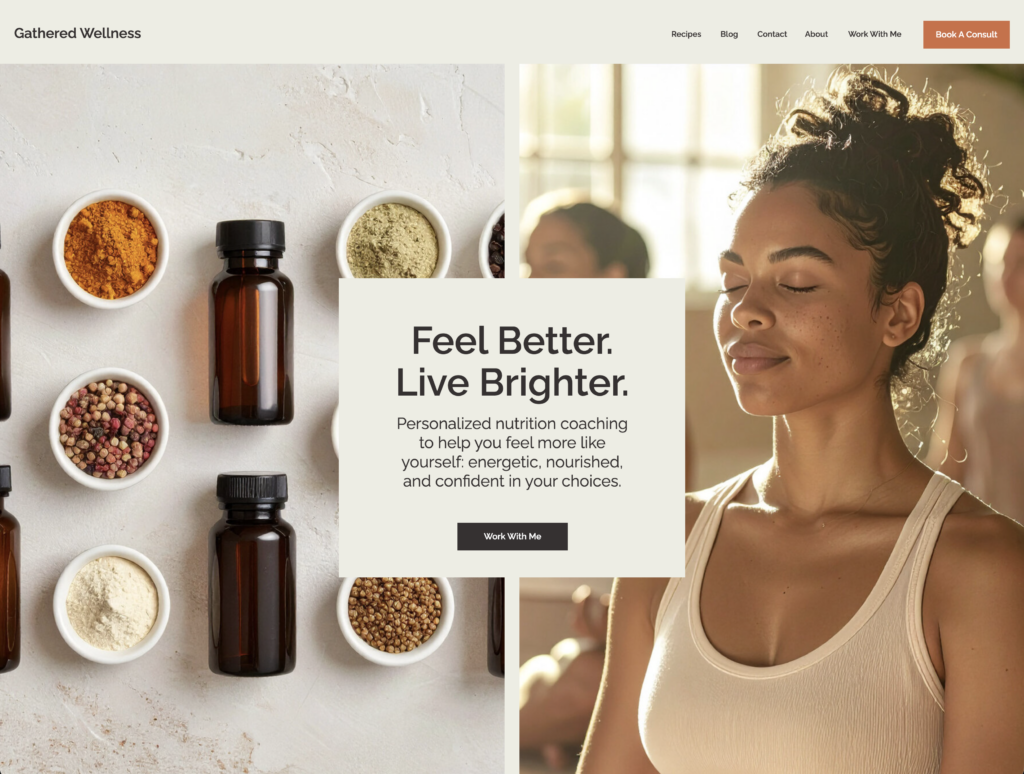
Wellness Is Personal. Your Website Should Be Too.
Choosing a wellness practitioner is different from choosing most other services.
People aren’t usually looking for someone to redesign a room or photograph an event. More often, they’re looking for help with something that’s affecting their everyday life. It might be their health, their relationship with food, their stress, their sleep, or simply the feeling that something isn’t working the way they’d hoped.
By the time they land on your website, they’ve often been carrying that question around for a while.
That’s why I don’t think people are only looking for information.
They’re looking for reassurance.
They’re trying to understand whether this feels like someone who will listen. Whether they’ll feel comfortable asking honest questions. Whether they’ll be understood rather than judged.
Those are surprisingly difficult things to communicate online.
Most wellness websites do a good job explaining what they offer. They list services, credentials, certifications, and packages. Those things matter, and they should absolutely be there.
But credentials are rarely the whole decision.
When someone is choosing between several qualified practitioners, they’re often asking quieter questions.
Do I feel comfortable here?
Does this person approach wellness the way I do?
Can I picture myself sitting across from them?
That’s where a website can do something a brochure never could.
It can begin introducing the person behind the practice.
Not by sharing every detail of your life, but by letting your perspective come through. The words you choose, the pace of the experience, the way you explain your philosophy, and even the way information is organized all shape how someone feels while they’re on your website.
Those details may seem small, but together they create an impression.
I’ve found that the strongest wellness websites don’t try to convince visitors they’re the right fit for everyone.
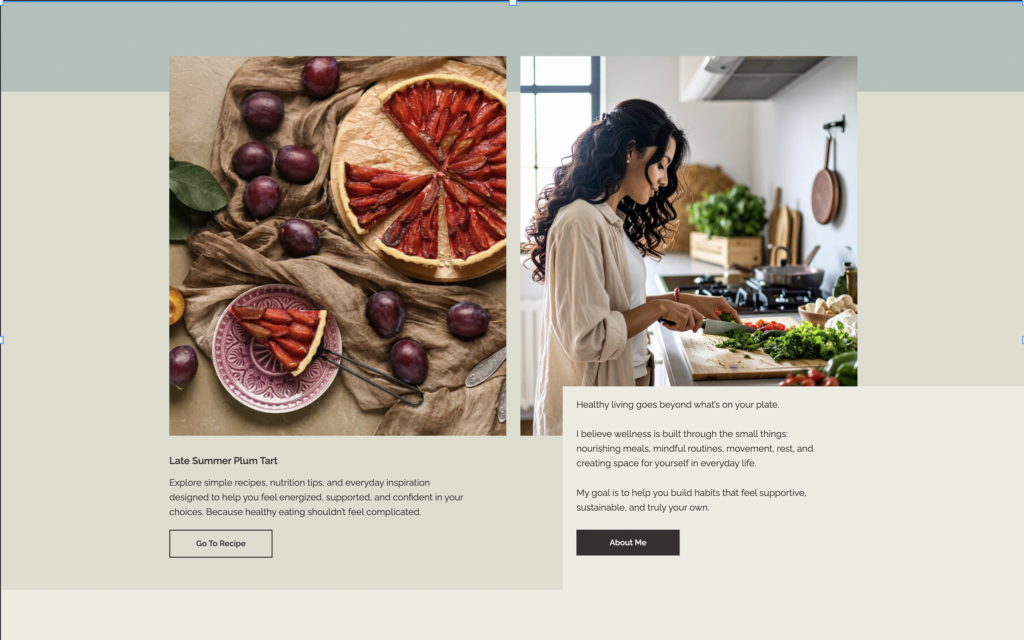
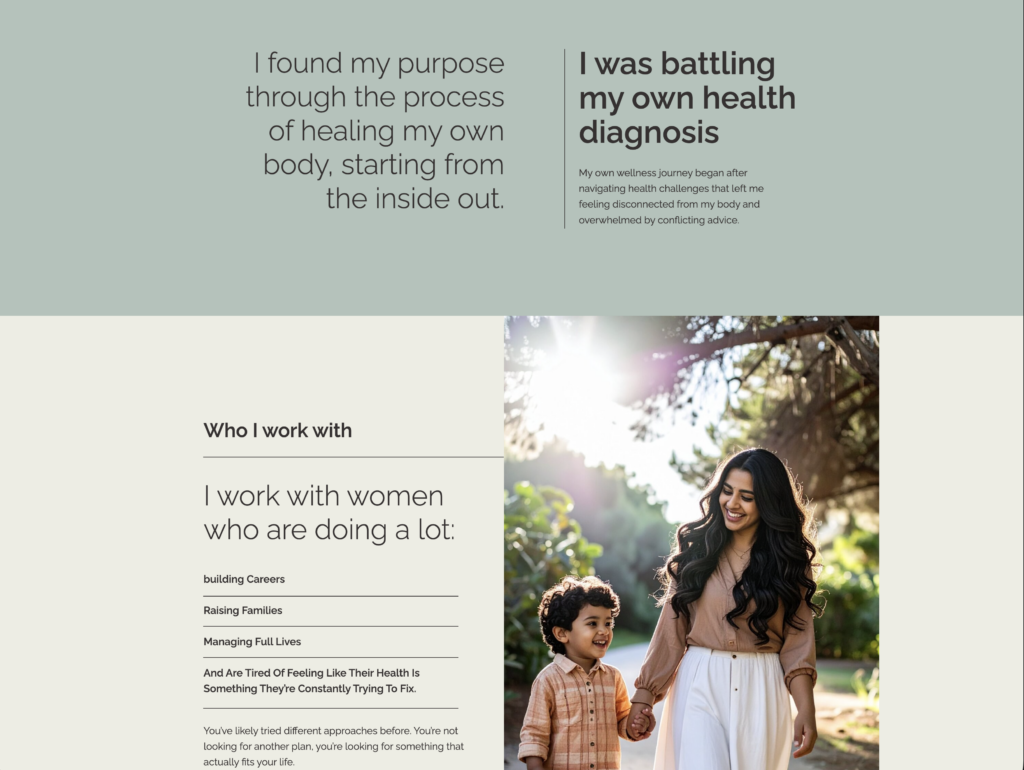
Instead, they help the right people recognize themselves.
Someone who values a gentle, encouraging approach should feel that before they ever schedule a consultation. Someone who appreciates practical, evidence-based guidance should recognize that too. The website becomes less about appealing to everyone and more about giving people enough clarity to decide whether they’ve found the right person.
That idea guided the wellness template I designed.
I wanted it to feel calm without feeling empty, welcoming without becoming overly polished, and thoughtful without overwhelming someone who’s already carrying enough on their mind. Rather than leading with a long list of services, the goal was to create space for visitors to understand the philosophy behind the work and the person offering it.
Because in wellness, people aren’t simply choosing a service.
They’re choosing someone they’ll trust with a very personal part of their lives.
Your website can’t create that relationship on its own.
But it can make someone feel understood before the first conversation ever begins.
And sometimes, that’s exactly what gives them the confidence to reach out.
For the coaches, wellness brands, and service providers who know their work is about more than a list of offerings: it’s about trust, transformation, and connection…
→ Explore Gathered Wellness — a website built around the story behind your work


be the first to leave a comment