
Helping Parents Feel Less Alone
One of the biggest mistakes service-based businesses make is assuming people are looking for information when they’re really looking for reassurance. They want to know they’re understood. They want to know someone recognizes what they’re experiencing. And they want to feel confident they’re in the right place before they ever reach out.
For therapy practices, support communities, coaches, and other relationship-driven organizations, that feeling matters just as much as the services themselves.
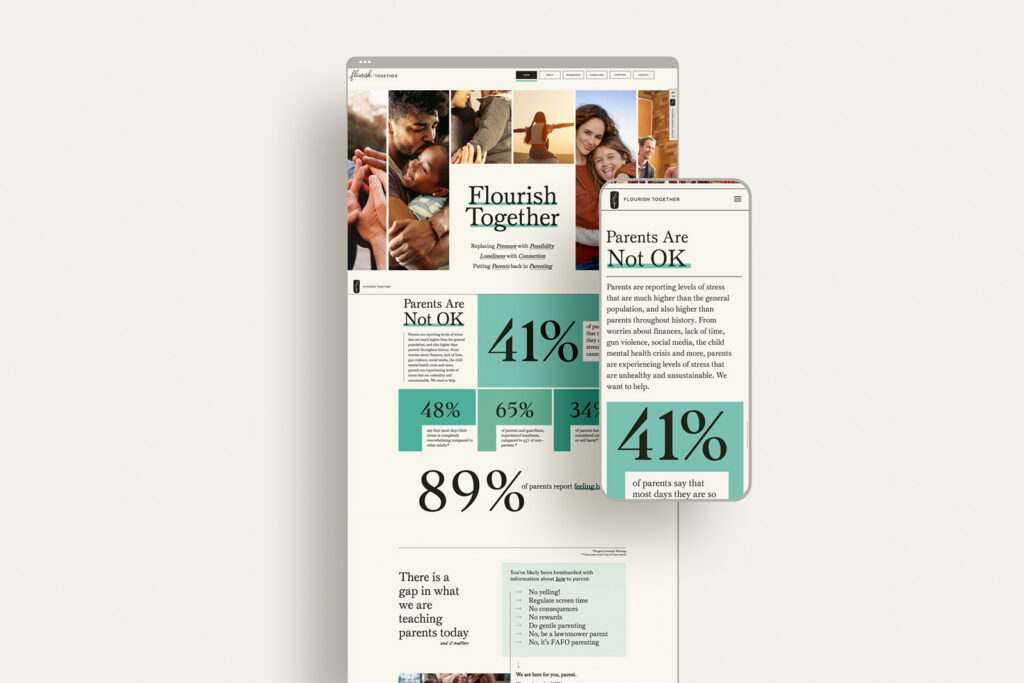
That idea became the foundation for this parent support website concept.
Many people seek support only after carrying too much on their own for far too long. Between work, childcare, household responsibilities, relationships, and the constant demands of modern life, many parents find themselves overwhelmed and running on empty. Reaching out for help is rarely a casual decision, which is why the most effective therapy and support websites do more than explain services. They create connection.
When someone lands on a website like this, they’re often looking for signs that they’re in the right place. They’re searching for language that reflects their experience and for evidence that the people behind the organization truly understand what they’re carrying. Before they evaluate programs, credentials, or pricing, they’re often asking a much simpler question:

Do these people understand what life feels like right now?
For this concept, that question shaped every design and messaging decision. Rather than leading with services, the site begins by acknowledging the realities many families face today. Rising childcare costs, two-income households, increasing responsibilities, and limited time have left many parents feeling stretched thin. The statistics featured throughout the website help illustrate those challenges, but the goal isn’t simply to present information. The goal is to help visitors recognize themselves in the story.
When people feel seen, trust begins to form.

While the site includes coaching, one-on-one support, community programs, and workplace consulting, the heart of the experience is something deeper. It’s the feeling that you don’t have to figure everything out alone. Through thoughtful messaging, research, and storytelling, the website is designed to balance honesty about the challenges parents face with hope for what is possible when support is available.
The strongest communities do more than provide answers. They create a sense of belonging. They remind people that their struggles are shared, their experiences are valid, and that help is available.
A website can’t replace a conversation, but it can create the conditions that make that conversation possible. It can build trust, foster connection, and help someone feel a little less alone before they ever reach out.
Sometimes that’s exactly what they need to take the first step forward.
See site here: https://madmagentacreative.com/featured-cs_flourish-together



be the first to leave a comment